

Aluminium fabrication for industrial and heavy-duty applications lives or dies on one decision made early, often before design is even finalized: which alloy grade to specify. Get it right and you get a structure that resists Kuwait’s harsh outdoor conditions, welds cleanly, and holds up under real load for years. Get it wrong and you end up with a fabrication that’s either overbuilt and unnecessarily expensive, or under-specified and showing corrosion, fatigue cracking, or weld failure well before it should.
If you’re sourcing aluminium fabrication in Kuwait for industrial equipment, structural framing, exhibition or booth structures, or outdoor installations, here’s how to think through grade selection properly.
Why Grade Selection Matters More in Aluminium Than in Steel
Steel fabricators can often get away with a fairly generic mild steel specification across many applications. Aluminium doesn’t work that way — the difference in mechanical properties, weldability, and corrosion behavior between alloy series is significant enough that using the wrong grade can genuinely compromise a structure, not just add unnecessary cost.
Aluminium alloys are grouped into series based on their primary alloying element, and for industrial fabrication work, three series come up repeatedly.
The Main Grades Used in Heavy-Duty Industrial Fabrication
5000 Series (Aluminium-Magnesium) — the workhorse for structural and marine-grade fabrication 5052 and 5083 are the common choices here. These grades offer excellent corrosion resistance — particularly relevant in Kuwait’s coastal humidity and salt-air exposure — good weldability using standard MIG/TIG processes, and solid strength for structural framing, tanks, and enclosures. 5083 in particular is widely used in marine and heavy structural applications where both strength and corrosion resistance under harsh conditions matter more than machinability.
6000 Series (Aluminium-Magnesium-Silicon) — the general-purpose structural and architectural choice 6061 and 6063 dominate general fabrication work. 6061 offers a strong balance of strength, weldability, and machinability, making it the default choice for structural framing, equipment frames, and load-bearing components. 6063 has excellent extrudability and a superior surface finish, which is why it’s the standard choice for architectural profiles, window and door framing, and — relevant for exhibition and signage work — extruded structural sections for booth frames and signage mounting systems.
7000 Series (Aluminium-Zinc) — high strength, specialist applications 7075 and similar grades deliver the highest strength-to-weight ratio of common aluminium alloys, approaching some steel grades in strength while remaining significantly lighter. However, they weld poorly using conventional processes and are more prone to stress corrosion cracking, so they’re typically reserved for applications where extreme strength-to-weight is the priority and the design can accommodate mechanical fastening instead of welding, or specialized welding processes.
Matching Grade to Application
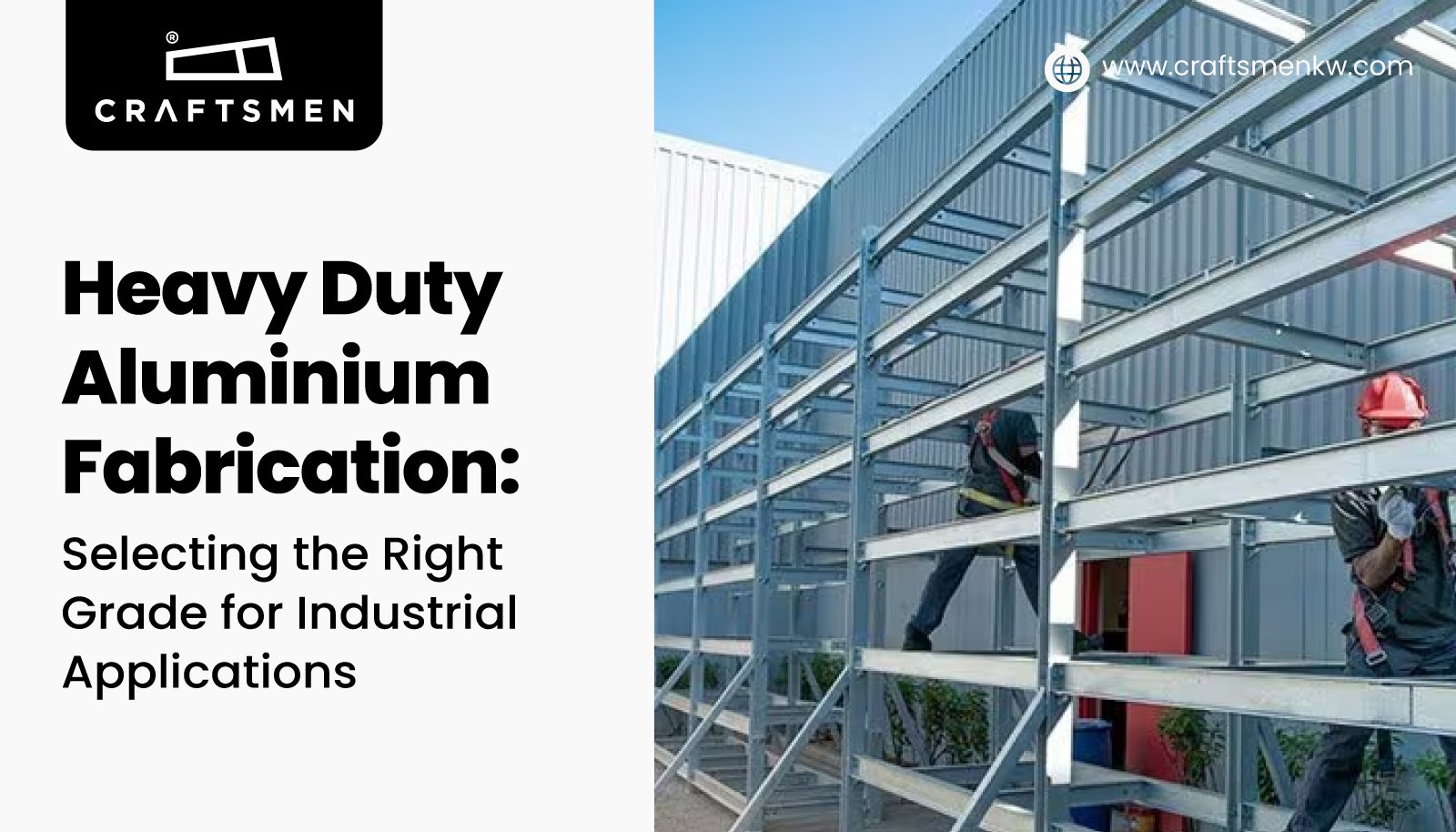
Outdoor structural framing exposed to weather (exhibition structures, canopies, signage frames): 5052 or 5083 for their corrosion resistance in humid, salt-exposed conditions, or 6061 where weldability and machinability matter more and the structure will have protective coating or finishing.
Load-bearing equipment frames and industrial machinery structures: 6061 is the standard choice, balancing strength, weldability, and cost effectively for most industrial framing applications.
Extruded architectural and signage profiles (window frames, door systems, 3D letter signage substructures, booth frame extrusions): 6063, chosen specifically for its clean extrudability and superior surface finish for anodizing or powder coating.
Marine or high-salt-exposure structures: 5083 remains the benchmark where corrosion resistance under sustained harsh exposure is the dominant requirement.
High-strength, weight-critical components where welding isn’t required: 7075, used selectively and usually in mechanically fastened rather than welded assemblies.
Weldability: A Critical Factor Often Overlooked
Not all aluminium grades weld equally well, and this is one of the most common specification mistakes in industrial fabrication. 5000 and 6000 series alloys weld reliably with standard TIG or MIG processes and appropriate filler wire selection. 7000 series alloys are prone to hot cracking and require specialized techniques, which is why they’re rarely the right choice for a fully welded structural fabrication.
Before finalizing a grade, it’s worth confirming with your fabricator not just whether the grade meets the strength requirement, but whether it welds cleanly with the joints and fabrication method your design actually calls for.
Corrosion Resistance in Kuwait’s Climate
Kuwait’s combination of intense heat, UV exposure, occasional sandstorm abrasion, and coastal humidity in certain areas makes corrosion resistance a genuine design consideration, not a theoretical one. Beyond alloy selection, three practical steps improve long-term durability:
- Anodizing — an electrochemical surface treatment that significantly improves corrosion and abrasion resistance, and is standard practice for architectural and signage aluminium in the region.
- Powder coating — provides both corrosion protection and color/branding flexibility, commonly used for structural framing and equipment housings that need a specific brand color finish.
- Isolating dissimilar metals — aluminium in direct contact with steel or other dissimilar metals corrodes faster through galvanic action; proper fabrication practice uses isolating gaskets or coatings at any aluminium-to-steel connection points.
Cost Considerations Across Grades
Raw material cost differences between 5000, 6000, and 7000 series alloys are real but usually secondary to fabrication cost — welding complexity, machining time, and finishing requirements typically account for more of the total project cost than the alloy premium itself. Specifying 7075 for a structure that could be built reliably in 6061 doesn’t just add material cost, it often adds fabrication cost too, since welding limitations may force a more complex mechanically-fastened design.
The more cost-effective approach for most industrial and structural projects in Kuwait is matching the grade precisely to the functional requirement — corrosion resistance, weldability, or strength-to-weight — rather than defaulting to the highest-spec alloy “to be safe.”
Choosing a Fabrication Partner Who Understands Grade Selection
Getting alloy selection right requires a fabricator who treats it as an engineering decision tied to your specific application and environment, not a default material choice applied across every project.
Craftsmen provides heavy-duty aluminium and steel fabrication in Kuwait for industrial, structural, exhibition, and architectural applications, working with our clients to select the right grade, finish, and joining method for each project’s real operating conditions — not a one-size-fits-all specification.
Contact Craftsmen to discuss aluminium fabrication and grade selection for your next industrial or structural project.